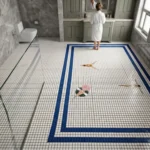
Custom mosaic tiles have become a defining feature of premium hospitality design. For hotels and restaurants, a mosaic installation is rarely just decoration 鈥?it is a brand statement, a wayfinding cue, and often the first thing a guest photographs. This guide explains the practical reasons hospitality projects choose custom mosaic, the materials that perform best in high-traffic F&B and guestroom environments, and how to budget and brief a project correctly.
Why Custom Mosaic, Not Off-the-Shelf Tile
Mass-produced ceramic tile solves a coverage problem; custom mosaic solves a design problem. Hospitality spaces live or die on first impressions, and a bespoke mosaic lets you carry a logo, a cultural motif, or a signature color palette through the entire property.
Branding and Identity
A lobby floor medallion, a bar front, or a restaurant feature wall can be built around your brand mark. Unlike printed vinyl or painted murals, mosaic is permanent, tactile, and photographs beautifully 鈥?which means your guests become your marketing department.
Durability in Commercial Traffic
Hotel lobbies and restaurant floors take thousands of footfalls per day. Glass mosaic and through-body porcelain mosaic resist scratching, staining, and fading far better than painted surfaces. When installed with epoxy grout, a mosaic floor can outlast the first renovation cycle of the furniture around it.
Design Flexibility
Mosaic sheets can be cut to follow curves, wrap columns, and form gradients that large-format tile cannot achieve. This is why mosaic remains the default choice for pool interiors, spa wet areas, and curved architectural details. If you are planning pool or spa finishes, our pool mosaic design guide covers the specific waterproofing and slip-resistance requirements for water-side installations.
Best Materials for Hotel and Restaurant Projects
Not all mosaic performs equally in a commercial environment. Selection should be driven by traffic, moisture, cleaning chemicals, and maintenance budget.
Glass Mosaic
Vitreous glass mosaic is the workhorse of hospitality design. It is impervious to moisture, available in hundreds of colors including metallics, and cleans easily. It is ideal for feature walls, back bars, and pool and spa surfaces. Note that polished glass can be slippery when wet 鈥?specify matte or sandblasted finishes for flooring.
Ceramic and Porcelain Mosaic
Porcelain mosaic offers the best weight-to-durability ratio for floors. Because porcelain is through-body colored, chips and edge wear are far less visible. It is also the most economical choice for large floor areas such as corridors and restaurant dining floors.
Natural Stone Mosaic
Marble, travertine, and slate mosaic add a five-star warmth that glass cannot match. Stone requires sealing and a gentler cleaning regime, making it best suited to low-moisture areas like lobby walls and elevator cabs. For a full comparison of stone options, see our custom mosaic tiles guide for hotels and resorts.
Smalti and Handmade Tiles
For signature installations 鈥?lobby art walls, restaurant centerpieces 鈥?handmade smalti and ceramic tiles carry visible artisan character. These are slower to produce and more expensive, so reserve them for hero installations where the budget supports it.
What a Professional Hospitality Mosaic Project Costs
Budgeting a mosaic project requires looking beyond the tile price. The installed cost is driven by five factors:
- Tile grade and material 鈥?glass and smalti cost more per square meter than porcelain
- Custom artwork 鈥?logos, portraits, and complex gradients require digitized design and more cutting labor
- Sheet size and pattern complexity 鈥?smaller tiles and irregular patterns increase installation time
- Substrate preparation 鈥?curved walls and wet areas need waterproofing before tiling begins
- Grout specification 鈥?epoxy grout for commercial wet areas adds material cost but prevents staining and cracking
As a rule of thumb, expect installation labor to equal or exceed the tile cost for complex custom work. Always request a full installation quotation, not a tile-only price, before approving a project.
Installation and Maintenance Essentials
A custom mosaic is only as good as its installation. Three decisions determine longevity:
Use Epoxy Grout in Wet and High-Traffic Areas
Standard cementitious grout is porous and stains easily behind bars and in bathrooms. Epoxy grout is non-porous, chemical-resistant, and color-stable 鈥?the correct specification for any commercial food or moisture zone. For detailed step-by-step installation guidance, our mosaic installation tutorial walks through substrate prep, adhesive selection, and grouting technique.
Plan the Layout Before Tiling
For branded designs, produce a scaled digital mockup and a numbered layout plan. This prevents pattern drift across large walls and lets installers align seams accurately. Order 5鈥?0% extra tile for cutting waste and future repairs.
Protect and Maintain the Surface
Seal stone mosaic before grouting and reseal annually. Clean glass and porcelain with pH-neutral cleaners; avoid acidic descalers on grout lines. With correct maintenance, a commercial mosaic installation should last 15鈥?0 years.
Featured Products
Every piece below is handcrafted by our artisans using premium ceramic and glass tiles, and can be produced in custom sizes and colors for hotel and restaurant projects.


Applications Across the Property
Beyond the lobby, custom mosaic adds value throughout a hospitality property:
- Hotel lobbies and guest rooms 鈥?feature walls, headboard panels, bathroom niches
- Restaurant and cafe decor 鈥?back bars, tabletops, open-kitchen surrounds
- Spa and wellness centers 鈥?steam room benches, treatment room accents, wet walls
- Pool and outdoor areas 鈥?waterline bands, step markers, resort entrance features
- Wayfinding and branding 鈥?floor medallions, corridor markers, exterior signage
For bathroom and spa applications, our luxury bathroom mosaic guide details the material and installation choices that hold up in wet, humid conditions.
How to Brief a Custom Mosaic Project
A clear brief is the difference between a smooth project and a costly revision cycle. Provide your supplier with:
- Site drawings and photos 鈥?exact dimensions, curves, and obstructions
- Reference imagery 鈥?colors, textures, and patterns you admire
- Traffic and moisture profile 鈥?floors vs. walls, wet vs. dry zones
- Brand assets 鈥?logo files in vector format for accurate scaling
- Timeline and budget 鈥?production lead time and installation window
Work with a supplier that produces in-house, so the artwork, sampling, and production stay under one roof. If your project spans multiple properties, a single production partner ensures color consistency across sites. For a deeper look at how to evaluate suppliers, see our guide to mosaic art for commercial spaces.
Contact Us
Interested in a custom mosaic collection for your hotel or restaurant? Contact us today to discuss custom designs or bulk orders.
Email: info@bilitiles.com
Website: https://bilitiles.com