Restaurant interiors do more than seat guests. They set the mood, reinforce the brand, and quietly influence how long a customer lingers — and whether they come back. Among the materials available to a designer, mosaic art occupies a unique position: it is durable enough for a commercial kitchen corridor, hygienic enough for a dining room, and expressive enough to become the feature guests photograph and share.
This guide explains how restaurants and cafés use custom mosaic art, which materials hold up in food-service environments, and what to consider before you commission a piece.
Why Mosaic Works in a Restaurant
Three properties make mosaic a natural fit for hospitality interiors.
Durability. A properly installed mosaic wall or floor outlasts paint, wallpaper, vinyl and most printed panels. Glass and porcelain tiles do not fade, peel or absorb stains. In a space that runs 12 to 16 hours a day, that longevity directly reduces refurbishment cost.
Hygiene. Mosaic surfaces are non-porous once grouted and sealed. There are no crevices for bacteria beyond the grout lines themselves, which can be sealed with an epoxy grout to create a near-continuous, food-safe surface. This is why health inspectors rarely flag a tiled commercial kitchen or bar front, but frequently flag cracked paint or worn laminate.
Branding. Custom mosaic lettering and logo work let a restaurant put its name, mark, or signature pattern into the architecture itself — not as a removable sign, but as part of the building. It reads as permanent and premium, which is exactly the impression a flagship location wants to project.
Material Choices for Food-Service Spaces
Not all mosaic materials behave the same in a busy restaurant. Here is how the main options compare.
Glass Mosaic
Glass mosaic tiles are the most popular choice for restaurant feature walls and bar fronts. They are impervious to water, resist stains and grease, and come in saturated colors that do not fade under UV or cleaning chemicals. Iridescent and metallic-finish glass tiles add depth in low lighting, which suits evening dining.
Glass is also easy to sanitize: a damp cloth and a mild detergent restore the surface. The main caution is that glass tile can chip under hard impact, so it is better on vertical surfaces and bar fronts than on high-traffic floors.
Porcelain and Ceramic Mosaic
Porcelain mosaic is the workhorse of commercial flooring. Full-body porcelain is through-colored, so a chip does not expose a different color underneath, and its low porosity makes it resistant to stains, acids and thermal shock. For restaurant kitchens and entrance floors, porcelain mosaic with a slip-resistant finish is the practical choice.
Ceramic mosaic is lighter and more affordable but more porous. It suits interior walls and decorative banding rather than wet or heavy-wear zones.
Natural Stone Mosaic
Marble, travertine, slate and limestone mosaics deliver a texture and warmth that glass cannot replicate. They suit fine-dining rooms, wine walls and hotel-adjacent cafés. However, stone is porous and acid-sensitive — spilled citrus, wine or vinegar can etch marble and limestone. If you choose stone, specify a penetrating sealer and schedule resealing as part of routine maintenance.
Metal and Mixed Media
Stainless steel, brass and mother-of-pearl accents are increasingly mixed into glass mosaics to create logo inlays and border details. They add a tactile, high-end finish but require careful sealing around dissimilar materials to prevent galvanic corrosion in wet areas.
Where Mosaic Art Goes in a Restaurant
Logo and Branding Walls
The most direct commercial use of custom mosaic is the branded wall. A mosaic version of the restaurant logo behind the host stand, over the bar, or on the exterior façade turns a generic sign into a signature. Because the artwork is made of individual tiles, it can be scaled to any dimension and curved around columns or archways.
Feature and Accent Walls
A single mosaic feature wall behind banquette seating becomes the room’s focal point. Abstract patterns, geometric compositions, or nature-inspired motifs draw the eye and give photographers a natural backdrop — which matters, because customers post images that effectively advertise the venue for free.
Bar Fronts and Back Bars
The bar front is the surface every seated customer faces. Mosaic cladding here hides wear, resists spilled drinks, and adds texture. A back bar with mosaic tiling and integrated lighting highlights the bottle display while standing up to constant wiping.
Floor Medallions and Entryways
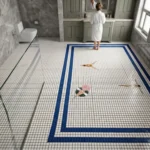
A mosaic medallion at the entrance or in the center of the dining room is a classic statement. For floors, specify unglazed porcelain or stone with a slip-rating appropriate to the area, and use an epoxy grout to resist staining from foot traffic and spills.
Tabletops and Service Counters
Smaller mosaic applications — tabletops, counter edges, washbasin surrounds — extend the design language through the whole space without the cost of a full wall. These are also the easiest pieces to commission as a test before committing to a large feature wall.
Hygiene and Maintenance Considerations
Restaurant mosaics live in a demanding environment: heat, grease, moisture, cleaning chemicals and constant traffic. Three decisions determine how easy the surface stays clean.
Epoxy grout. Cement-based grout is porous and will absorb grease and stains over time. Epoxy grout is non-porous, food-safe and resistant to most cleaning agents. For kitchen, bar and floor applications, epoxy grout is worth the higher material cost.
Sealing. Glass and porcelain need no sealer. Natural stone should be sealed at installation and resealed periodically (typically every one to three years depending on traffic and cleaning products).
Cleaning routine. Daily cleaning with a pH-neutral cleaner is enough for glass and porcelain. Avoid abrasive pads on glass tile, and avoid acidic cleaners (vinegar, citrus degreasers) on natural stone. A grout brush used periodically on epoxy grout lines keeps them bright without damage.
Installation Considerations
Commercial installation differs from residential in scheduling and substrate.
Substrate. Mosaic needs a flat, stable, crack-free substrate. For floors, a cementitious backer or leveling underlayment is standard; for walls, moisture-resistant board in wet areas. Movement joints should be honored rather than tiled over, or the mosaic will crack when the building moves.
Lead time. Custom mosaic art is made to order. A full feature wall or logo piece typically takes several weeks from artwork approval to delivery, plus installation. Involve the mosaic studio early — ideally at the design phase — so the artwork dimensions, lighting and substrate are planned together.
Slip resistance. For floor areas, check the tile’s R-value or DIN 51097 rating against the zone’s requirements. Entrances, kitchens and bar floors need higher slip resistance than dining-room seating areas.
Cost and Return on Investment
Mosaic art is a premium material, but its total cost of ownership is often lower than alternatives that need repainting or replacement every few years. Budget depends on material (glass is generally more affordable than hand-cut stone or mother-of-pearl), complexity of the design, and installation area. Custom logo and lettering pieces cost more per square foot than stock patterns because each is fabricated to order.
The return is partly intangible — stronger brand presence, higher perceived quality — and partly measurable: reduced maintenance spend, fewer refurbishment cycles, and a distinctive look that differentiates the venue in a crowded market.
Design Tips for Restaurant Mosaics
- Match lighting first. Glass mosaic changes character with lighting. Specify the lighting plan alongside the artwork so color and finish read as intended at service time.
- Start with one statement piece. A single logo wall or feature panel delivers most of the impact for a fraction of the cost of tiling every surface.
- Coordinate grout color. Grout is a design element, not a neutral. A contrasting grout emphasizes the tile pattern; a matching grout creates a smoother, more continuous surface.
- Protect corners and edges. Use trim profiles on outside corners and bar edges to prevent chipping in high-contact areas.
Frequently Asked Questions
Is mosaic art food-safe for a commercial kitchen?
Yes. Non-porous glass and porcelain tile with epoxy grout form a smooth, cleanable surface suitable for food-service areas. Natural stone requires sealing to be food-safe.
Can mosaic be installed over existing tile?
Often yes, if the existing surface is sound, clean and flat, and the added thickness does not create trim or door-clearance problems. A professional assessment of the substrate is recommended.
How long does custom mosaic art take to produce?
A custom logo or feature wall typically takes three to six weeks from design approval, depending on size and complexity. Plan installation into any renovation schedule accordingly.
How do I clean a glass mosaic bar front?
Wipe with a soft cloth and pH-neutral cleaner. Avoid abrasive pads and acidic products. Epoxy grout lines can be brushed occasionally to stay bright.
Conclusion
Mosaic art gives a restaurant something paint and printed panels cannot: a permanent, hygienic, brand-defining surface that improves with use rather than degrading. Whether it is a logo wall behind the host stand, a glass-clad bar front, or a stone medallion at the door, the material earns its place by combining durability with design.
When you choose materials for the environment, specify epoxy grout in wet and high-traffic zones, and plan the artwork early, custom mosaic becomes not an expense but an investment in how the venue is perceived — and how long it stays looking that way.