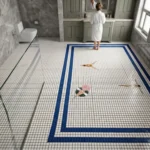
Zellige Mosaic Tiles: The Complete Guide to Moroccan-Inspired Tile Art (2026)
Few materials carry as much visual history as zellige. For more than a thousand years, master artisans in Fez and Tetouan have shaped raw clay into small, glaze-fired tiles whose slightly irregular surfaces catch light in a way no mass-produced tile can imitate. Today, zellige-inspired mosaic tiles are one of the most requested looks in kitchen, bathroom and hospitality design — and one of the most misunderstood.
This guide explains what authentic zellige actually is, how it differs from the lookalikes sold under the same name, where it performs best, and exactly what to specify, budget and install in 2026.
What Are Zellige Mosaic Tiles?
Zellige (also spelled zellij or zelige) is a traditional Moroccan form of hand-cut, glazed terracotta tile. The word comes from the Arabic *zellij*, meaning “small polished stone.” Historically, artisans pressed wet clay into molds, fired it once, applied a colored glaze — typically cobalt blue, emerald green, white, or honey yellow — and fired it a second time. The finished squares were then chiseled by hand into geometric shapes for the intricate wall compositions that define Moorish architecture from Marrakesh to Granada.
What makes zellige distinctive today is not the geometry but the surface character: every tile has natural variations in glaze thickness, color depth and edge straightness. Light reflects differently from tile to tile, creating the warm, handmade shimmer that machine-made tiles cannot reproduce.
Two things matter when you buy zellige in 2026:
- Authentic clay zellige is still made by hand in Morocco (and by specialist workshops elsewhere), fired from low-absorption clay with a traditional lead-free glaze.
- Zellige-style mosaic is a broader category that includes hand-glazed ceramic and, increasingly, glass and porcelain mosaics engineered to mimic the zellige surface — often a better technical fit for pools, high-traffic commercial floors and wet zones.
Authentic Clay Zellige vs. Lookalikes: Know What You Are Buying
The word “zellige” appears on tiles ranging from $4 to $40+ per square foot. The differences are not cosmetic — they affect durability, maintenance and installed cost.
| Attribute | Authentic clay zellige | Zellige-style ceramic | Zellige-look glass mosaic |
|---|---|---|---|
| Body | Hand-pressed terracotta | Machine-pressed porcelain/ceramic | Soda-lime glass tesserae |
| Edge character | Irregular, hand-cut feel | Slightly rectified to mimic | Uniform with handmade finish option |
| Water absorption | 3–6% (needs sealing in wet zones) | <0.5% (frost- and moisture-safe) | <0.5%, fully impervious |
| Scratch resistance | Moderate (glaze dependent) | High (PEI 3–4) | High |
| Slip resistance on floors | Low unless textured | Depends on finish; DCOF ≥0.42 recommended | Matte glass can reach DCOF ≥0.42–0.60 |
| Best use | Backsplashes, feature walls, low-traffic decor | Walls and residential floors | Pools, showers, commercial walls and floors |
| Typical price (material) | $15–$40/sq ft | $8–$20/sq ft | $12–$35/sq ft |
The honest rule: buy authentic clay zellige where its handcrafted soul is the point (a kitchen backsplash, a fireplace surround, a restaurant feature wall), and buy an engineered zellige-look mosaic where water, frost, chemicals or foot traffic would destroy hand-made terracotta.
Material Science: Why “Handmade” Is Both a Feature and a Risk
Authentic zellige’s beauty comes from its material reality — and so do its limitations. If you are weighing genuine handwork against factory output, our handmade mosaic vs. machine-made comparison shows where the extra cost buys real value.
Water absorption. Hand-pressed terracotta typically absorbs 3–6% of its weight in water (ASTM C373), versus under 0.5% for porcelain or glass. In a shower or pool environment, absorbed moisture can cause glaze crazing (fine cracks) and, in freeze-thaw climates, spalling. If you love the clay look in a wet zone, the tile must be sealed with a penetrating sealer and the grout must be epoxy or a high-performance cementitious grout.
Glaze hardness. Traditional glazes are beautiful but rate only 4–5 on the Mohs scale. Kitchen countertops see 5.5 (knife steel) every day — which is why zellige is a wall material, not a countertop material. On floors, specify a matte, textured glaze and check the tile’s DCOF (ANSI A326.3) is at least 0.42 before installation.
Color variation. Expect it. A single authentic batch can vary several shades. This is the charm — but only if you plan for it. Order from one production run, and ask for the batch’s color-range sample board (usually 8–12 tiles) before you approve. Shade variation is also a palette decision — our guide to the psychology of color in mosaic art explains how tone and saturation steer a room’s mood.
Thermal behavior. Clay expands and contracts more than porcelain. On a heated wall (fireplace surround, radiant bathroom wall) or outdoors in a freeze-thaw zone, leave proper expansion joints — typically every 8–12 feet of run and at all internal corners, following TCNA guidelines.
Formats, Sizes and Mounting Options
Traditional zellige is sold as individual squares in sizes from 2×2 to 6×6 inches. For practical installation, most suppliers now offer:
- Sheet-mounted mosaics — small zellige-style tiles (1×1 to 2×2 in) pre-mounted on mesh, typically 12×12 in sheets. Faster to install, consistent spacing, ideal for zellige-look glass mosaics.
- Paper-faced panels — larger compositions (up to 24×24 in) for feature walls, often used for custom patterns.
- Loose hand-cut tiles — the authentic route; slow, expensive installation by a specialist, but the most genuine result.
A note on grout: because authentic tiles are never perfectly square, grout lines will naturally vary from 1/16 to 1/8 inch or wider. This irregularity is part of the aesthetic. For zellige-look glass mosaics, standard 1/16–1/8 in joints with a color-matched grout keep the handmade feel while simplifying maintenance.
Where Zellige Works Best — and Where It Does Not
Kitchen backsplash. The classic 2026 application. A white or celadon zellige backsplash behind a range reads as high-end and is easy to clean with a pH-neutral cleaner. Pair it with a marble mosaic countertop reference from our marble mosaic guide for a layered stone look.
Shower and bath feature walls. Zellige-style glass or sealed ceramic performs beautifully on a shower wall. For the full design context — niches, bench details and wet-zone material rules — see our mosaic backsplash ideas from kitchen to bathroom.
Fireplace surrounds and alcoves. The glaze’s reflective depth makes zellige the single most requested fireplace material in our custom studio. Because the wall gets hot but not wet, authentic clay is acceptable here with a polymer-modified thin-set rated for the surface temperature.
Restaurant and hotel interiors. Hospitality designers use zellige for bar fronts, host stands and banquette walls. It photographs beautifully and reads as craft — but specify a glazed ceramic or glass version with high stain resistance in food-contact zones. For the commercial procurement angle, see our guide to custom mosaic tiles for restaurants; for the looks driving hotel and resort projects this year, our luxury glass mosaic design trends guide is the better starting point.
What to avoid: pool interiors (chlorine and absorption are a bad marriage; use glass mosaic instead), outdoor floors in freeze-thaw climates (our outdoor mosaic installation guide covers the waterproofing rules that make exterior work viable), and kitchen countertops.
How to Specify Zellige for a Project
A professional specification sheet for zellige-style mosaic should lock down five variables:
- Surface character — desired shade variation: “low” (tight, modern), “medium” (classic), “high” (rustic).
- Format — sheet size, individual tile size, thickness (8–10 mm typical for clay; 4–8 mm for glass mosaics).
- Absorption class — specify ≤0.5% for any wet or commercial application.
- Slip rating — if flooring, DCOF wet ≥0.42 (ANSI A326.3).
- Batch and sample approval — one production batch, 10% overage for cutting waste, physical sample board sign-off before production begins.
If you are sourcing for a hotel or large commercial project, read our hotel mosaic procurement guide for the full quality-inspection and lead-time framework.
Installation Best Practices
The #1 cause of failed zellige installations is treating it like a rectified machine tile. Follow these rules:
Substrate. Walls must be flat to 1/8 inch over 8 feet. Zellige will not hide substrate waviness — it will amplify it.
Adhesive. Use a polymer-modified thin-set meeting ANSI A118.4 for walls; for floors or wet areas, A118.15 (improved, LHT) or a rapid-set modified mortar. Back-butter each authentic clay tile — hand-cut pieces have uneven backs and need full coverage (at least 95% for wet areas).
Grout. For authentic clay zellige, use epoxy or a polymer-modified grout; seal the tiles *before* grouting so pigment cannot stain the porous body. For glass zellige-look mosaics, sanded cementitious grout or epoxy both work — epoxy is mandatory for commercial kitchens and pools.
Joints and expansion. Do not force uniform joints on authentic zellige. Allow natural variation, then honor TCNA EJ171 expansion-joint requirements: at changes of plane, at internal corners, and every 8–12 feet on long runs.
Curing. 48–72 hours before grout, 7 days before sealing, 28 days before heavy use. Rushing the schedule is the classic contractor shortcut that ruins handmade tile.
For a step-by-step walkthrough of the full process, see our mosaic tile installation tutorial.
Maintenance and Longevity
Zellige is not high-maintenance — it is *predictable*-maintenance:
- Daily: pH-neutral cleaner and a soft cloth or sponge. Never use acid or abrasive pads on glazed surfaces.
- Quarterly: reseal authentic clay in wet zones (a drop of water should bead; if it soaks in within 30 seconds, reseal).
- Annually: inspect grout lines in showers and commercial kitchens; regrout or epoxy-coat worn joints before water finds a path behind the tile.
Well-installed zellige-style glass or porcelain will outlast the building — 50+ years is realistic. Authentic clay, protected from standing water, delivers 20–30 years of service before a refresh is worth considering.
Cost Guide for 2026
Installed cost depends on material, format and labor (authentic loose tile is labor-intensive):
| Option | Material cost | Installed cost (typical) |
|---|---|---|
| Zellige-style ceramic, sheet-mounted | $8–$20/sq ft | $18–$40/sq ft |
| Zellige-look glass mosaic | $12–$35/sq ft | $25–$55/sq ft |
| Authentic clay zellige (loose, specialist installer) | $15–$40/sq ft | $45–$90/sq ft |
| Custom hand-cut zellige composition / feature wall | $40–$120/sq ft | $100–$250/sq ft |
A standard 30 sq ft kitchen backsplash in zellige-style ceramic typically lands between $600 and $1,200 installed; the same area in authentic loose clay with a specialist installer runs $1,500–$2,700. For a full pricing framework across every mosaic type, see our pool-themed mosaic cost guide.
FAQ
Is zellige the same as subway tile?
No. Subway tile is a rectified, machine-made format. Zellige is defined by its handmade surface character and glaze variation, regardless of format.
Can zellige go on a shower floor?
Not authentic clay — too slippery and absorbent. Use a matte, textured zellige-look glass or porcelain mosaic with DCOF ≥0.42 instead.
Why does my zellige have color variation?
Because it is handmade. Low-variation batches exist; specify “low shade variation” if you want a more uniform modern look, and always approve a sample board first.
Does zellige need sealing?
Authentic clay: yes, in wet zones. Glazed ceramic and glass zellige-look tiles: no, but seal the grout.
Is zellige expensive?
Entry-level zellige-style ceramic is comparable to premium subway tile; authentic hand-cut clay runs 2–4× more because of the labor embedded in every tile.
Working with BiliTiles
BiliTiles is a handmade mosaic manufacturer in Foshan, China, with over 15 years of export experience. We produce zellige-style glass and ceramic mosaics in 200+ glaze colors, custom shade-variation control, and any sheet format your installer prefers. For projects that need the authentic clay look with modern performance — pools excluded, where our swimming pool mosaic specification guide applies — we will build a physical sample board of your chosen palette before production, keep your entire order to one batch, and ship with full QC documentation (color ΔE, absorption, dimensions).
Send us your tile size, space type and reference photos, and we will return a material recommendation, a sample plan and a factory-direct quote within two working days.