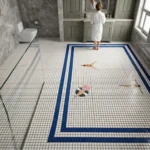
Hand-made ceramic mosaic has been used in architecture for thousands of years, and it remains one of the most reliable decorative materials available. This guide explains what it is, how it is made, and where it performs best.
What hand-made ceramic mosaic is
It is composed of small ceramic tiles, each formed, glazed and fired, then arranged by hand into a design. Unlike printed imitations, the colour comes from glaze applied to the tile itself, so it runs through the surface rather than sitting on top of it.
How it is made
Clay is shaped into tiles, dried, then glazed and fired at high temperature. The firing fuses the glaze to the body, producing a hard, colour-fast surface. Tiles are then cut to size, arranged into the design and fixed to mesh backing for installation.
Properties that matter
Ceramic mosaic is durable, easy to clean, resistant to water, stains and fading, and suitable for both floors and walls. Glazed surfaces are hygienic, and matte finishes provide grip in wet areas. It is inert once fired and emits nothing into the room.
Where it works best
Bathrooms, kitchens, pools and spas, entrance halls and commercial interiors all suit ceramic mosaic. It handles heat, moisture and heavy use, and can be colour-matched or combined with glass and stone for contrast.
Care
Routine cleaning with water and a mild detergent is sufficient. Most installations need no sealing, although grout in wet areas should be maintained as normal.
Frequently Asked Questions
Is ceramic as durable as porcelain?
Glazed ceramic is highly durable for decorative and wet-area use; porcelain offers higher density where extreme wear is expected.
Can it be used outdoors?
Yes, with frost-resistant tiles and exterior-grade grout in cold climates.
Featured Products


Contact Us
Interested in a bespoke commission or a bulk order? Tell us the space and the look you have in mind, and we will send a free mock-up.
Email: info@bilitiles.com
Website: https://bilitiles.com