Orange is the bravest colour in the tile palette, and it is also the most forgiving when it arrives broken into thousands of small glazed fragments. The Glazed Broken Ceramic Mosaic Porcelain Tile takes tangerine, apricot and light-yellow glazes, fractures them into irregular hand-set chips, and mounts them on 300 × 300 mm mesh sheets that install like fabric and wear like stone. This showcase walks through the real construction of the sheet, its verified dimensions, and three worked scenes — a Mediterranean bathroom, a spa-hotel bar, and a sunset plunge pool — where the product changes character completely depending on distance and light.
Glazed Broken Ceramic Mosaic Porcelain Tile
Ceramic · Sheet 300 × 300 mm · Thickness 7 mm · Glossy finish · Mesh mounted · Sold by the sheet
Understanding the Product Before You Spec It
The first thing to understand is the format. This is a porcelain-body ceramic mosaic, glazed in warm citrus tones and cut into irregular fragments — nothing about it is square, gridded or uniform. Larger broken pieces are scattered among smaller filler chips, and every chip is dipped in glossy glaze before firing, so highlights roll across the surface in a way flat tiles can never imitate. On the mesh sheet the pieces sit almost edge to edge; once installed with grout, thin pale joints separate each fragment and the surface starts to shimmer.
The second thing to understand is scale. Each chip measures roughly 14–15 mm — about twenty-one chips span one 300 mm sheet — so a single square metre holds well over ten thousand individual glazed pieces. That density is why the wall reads as a fine granular texture from across the room rather than as a collection of tiles. If you have ever seen a mosaic that looked like big chunky squares pasted on a wall, that was a coarse-format product; this is the opposite end of the scale, and the difference is the entire point of the design.
Third: the glaze is the product. Because the body is fired porcelain-style ceramic, the colour is sealed under a glassy skin that is non-porous, UV-stable and chemical-resistant. The orange will not fade on a south-facing façade, leach into pool water, or stain under sunscreen — concerns that rule out many dyed natural stones in wet areas.

Verified Dimensions and Full Specification
Every number below is taken directly from the published product specification, and the diagram shows the sheet measured out so you can sanity-check quantities before ordering. One note on chip size: the factory publishes the sheet format but not the individual fragment dimension, so the ≈ 14.3 mm figure was measured from the product sheet pictured — accurate enough for design intent, but treat it as a working average rather than a tolerance.

| Attribute | Specification |
|---|---|
| Material | Ceramic (porcelain-style body) |
| Sheet size | 300 × 300 mm |
| Chip size | ≈ 14.3 mm irregular fragments (approx. 21 chips across the sheet — measured from the product sheet, not stated on the page) |
| Thickness | 7 mm |
| Finish | Glossy |
| Mounting | Mesh mounted |
| Sold by | Sheet (22 sheets per box, 1.98 m², 22 kg per box) |
| Applications | Indoor and outdoor walls, shower walls, shower floors, steam rooms, swimming pools |
Scene One: A Mediterranean Bathroom in Morning Light
The orange family behaves differently from burgundy or blue in a bathroom: it carries light. In the first concept scene, a single waist-height band of the mosaic runs along a plaster-finished shower wall and wraps into the bathtub alcove of a sunlit, Mediterranean-style hotel bathroom. Against warm sand-toned plaster and terracotta floor tiles, the band behaves like a stripe of captured sunlight that never goes out — exactly the effect designers chase when they specify amber glass or onyx, at a fraction of the cost.
Notice what the irregular chip format contributes. Because the fragments vary in size and no two glaze pools match, the band has depth at every viewing distance: at two metres you see individual fruit-bright chips, at seven metres the whole surface settles into a warm apricot glow. A machine-cut square mosaic at the same scale would read flat by comparison. This is the same “one concentrated surface” logic described in our guide to designing a spa-like bathroom retreat with mosaic — a single band, generous calm around it, and daylight allowed to graze the texture.

Scene Two: The Spa-Hotel Juice Bar
Hospitality designers have learned that guests photograph counters. In the second scene, the mosaic clads the front of a spa-hotel juice bar in a waist-height band, with a narrow vertical strip climbing the wall beside the menu boards. The citrus palette is doing narrative work here — orange reads as fresh-pressed, vitamin-rich, morning energy — and because the chips are glossy, the counter glows under pendant lighting even in a dim, moody room.
The specification quietly solves the hard problems of bar cladding. A 7 mm glazed ceramic surface shrugs off spilled juice, coffee, luggage scuffs and cleaning chemicals; grout joints are tight enough to wipe clean; and any single damaged chip can be swapped out in minutes without touching the rest of the field. Compare that with painted timber or stone veneer, both of which show scars permanently. For food-and-beverage areas, the product’s approval for shower walls and immersion also means splash zones and even bar-top inlays are within scope. Broader placement strategy for accent surfaces like this is covered in our hotel mosaic design guide.

Scene Three: A Plunge Pool at Sunset
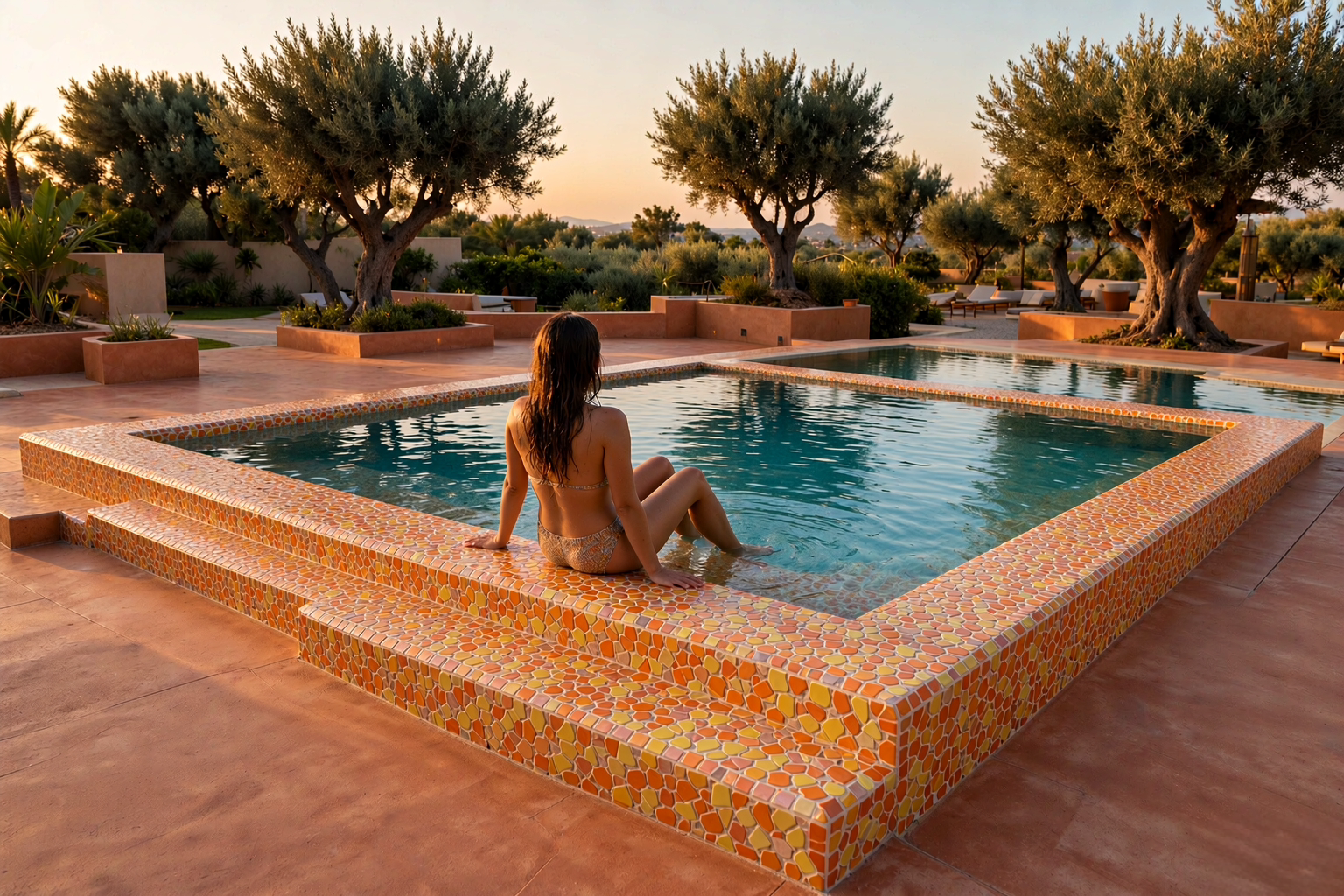
The third scene puts the product where most clients never think to use it: fully immersed. A boutique-hotel plunge pool is lined along its waterline, steps and coping with the orange mosaic, and at sunset the effect is almost unfair — warm water, warm stone deck, and a tile surface that repeats both. The complementary tension between orange tile and turquoise water keeps the pool edge from disappearing, which is also a genuine safety benefit: steps and depth changes stay visually legible even in low light.
Technically, this is where the small-chip format earns its keep. Irregular 14 mm chips on mesh conform to step noses, curved corners and overflow channels without awkward cuts. The glossy glaze is non-porous and unaffected by chlorine or salt systems, and the light-coloured joints specified here keep the waterline crisp. The only maintenance rule is routine: keep water chemistry balanced and rinse scale deposits before they etch the glaze — the same discipline any premium pool finish requires.
Getting the Details Right: Grout, Light, Restraint
Three specification decisions determine whether an orange mosaic looks crafted or chaotic.
Grout choice. Go lighter and warmer than you expect — bone, warm grey or soft sand. Dark grout with bright chips produces a checkerboard effect that magnifies every irregularity; pale grout lets the fragments merge into one continuous glazed field. In wet areas, choose a polymer-modified cement grout or epoxy for joints that stay clean.
Lighting geometry. Glossy mosaics need light that travels across the surface, not down onto it. Wall-wash a mosaic wall with linear LEDs, or position sconces so beams rake the texture at a shallow angle. Overhead downlights directly in front of the wall will flatten it and create mirror-hotspots.
Discipline of area. Orange is a high-chroma colour; the rule is one hero surface per sightline. If the bar front is mosaic, keep the back bar calm. If the shower wall carries the band, keep the vanity splashback in plain stone. The mosaic provides all the energy a room needs.
Why Factory-Direct Changes the Project Maths
This sheet is manufactured in Foshan, Guangdong, and BiliTiles supplies it factory-direct — a supply chain with real consequences for project budgets. Removing wholesale and import-distributor layers typically transforms the per-square-metre cost of decorative mosaic, and it shortens the path for custom work: because the factory glazes and fires its own chips, adjusted colour blends, graduation effects or project-specific tones can be quoted and sampled directly from the kiln instead of being negotiated through agents.
For procurement teams, the logistics are equally tidy. Sheets are a uniform 300 × 300 mm, so quantity take-off is a two-line calculation (area ÷ 0.09 m², plus 10% waste); boxes hold 22 sheets covering 1.98 m² and weighing 22 kg, which keeps container loading predictable. Mesh mounting cuts installation time substantially versus individually set tesserae. Our hotel mosaic procurement guide lists the sampling, lead-time and tolerance questions to close before issuing a purchase order.
Where This Product Fits in Commercial Work
For specification writers: glazed ceramic mosaic, irregular fragment format, mesh-mounted, 7 mm nominal thickness, glossy finish, rated for interior and exterior walls, shower walls and floors, steam rooms and swimming pools. Suitable substrates are cement render, backer board or properly prepared masonry with a quality thinset; white thinset is recommended for pools and steam rooms to prevent shadowing through pale glazes.
Typical commercial applications include spa and wellness interiors, juice bars and cafés, resort poolscapes, hotel signage walls and lift lobbies, and feature staircases. In residential projects the same qualities translate to kitchen splashbacks, breakfast-nook features, garden water features and courtyard walls — anywhere warmth and durability need to coexist.
Installation Notes and Long-Term Care
Installation follows standard mesh-mounted practice. Dry-fit a few sheets to agree joint rhythm, press sheets mesh-out into fresh thinset, flatten with a grout float, and cut the mesh between chips with a utility knife to trim around outlets, niches and edges. Irregular chips mean most cuts need nothing more than nippers; reserve the wet saw for the occasional fragment that must be halved cleanly.
Care is deliberately boring: pH-neutral cleaner, occasional soft-brush pass across the joints, and no abrasive powders or acid descalers on the glaze. In pools and steam rooms, keep water chemistry in balance and rinse mineral deposits as part of the regular schedule. Glazed ceramic of this type is UV-stable and freeze-thaw resistant — the manufacturer’s approval for outdoor walls and pools is not marketing generosity but a reflection of the fired body.
Frequently Asked Questions
How do I calculate how many sheets to order? Each 300 × 300 mm sheet covers 0.09 m². Divide your wall or floor area by 0.09, then add about 10% for cuts and tonal blending. A 12 m² installation works out to roughly 133 sheets — about six boxes at 1.98 m² each.
Is the surface suitable for shower floors? Yes. The specification explicitly approves shower floors: the many small grout joints provide grip underfoot, and the 7 mm body is thick enough for a robust thinset bed on a correctly sloped pan.
Will the orange colour fade outdoors or in a pool? No. The colour is fired glaze, not surface dye — it is UV-stable and unaffected by pool chemicals, which is why the sheet is rated for outdoor walls and swimming pools. Balanced water chemistry and routine rinsing will keep the gloss bright for decades.
Where can I check the price or get a sample first? Current factory pricing, box coverage and the sample request are on the Glazed Broken Ceramic Mosaic Porcelain Tile product page. Order a sample and judge the glaze under your own project lighting before committing.
Final Word
Few surfaces deliver this much personality per square metre: thousands of hand-glazed citrus fragments on a sheet that installs in hours and survives showers, steam and pool water. See the full palette in the ceramic and porcelain mosaic tiles collection, or visit the Glazed Broken Ceramic Mosaic Porcelain Tile page for sheet pricing and samples.