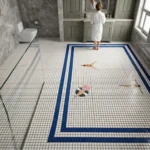
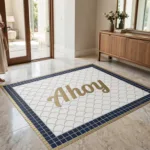
Blue is the one colour that never seems to date in a wet room. The Blue Broken Ceramic Mosaic Tiles take that idea further than a flat blue tile can: the chips are cut into irregular pieces and glazed across a range from deep navy through royal blue and periwinkle to a soft chalk white, so a single sheet already contains the tonal depth that normally takes three materials to achieve.
Product: Blue Broken Ceramic Mosaic Tiles
300 × 300 mm mesh-mounted sheets · 7 mm thick · glossy glazed finish · sold by the sheet
View sizes, factory price and request a sample →
The material is deliberately unsystematic. There is no repeating module and no fixed chip size, which means the wall reads as a hand-laid field rather than a tiled grid. Below is the actual sheet, the measured specification, and three installations where the blue does most of the work.
The Sheet, Up Close
This is the production sheet photographed flat on white — no rendering, no colour grading.
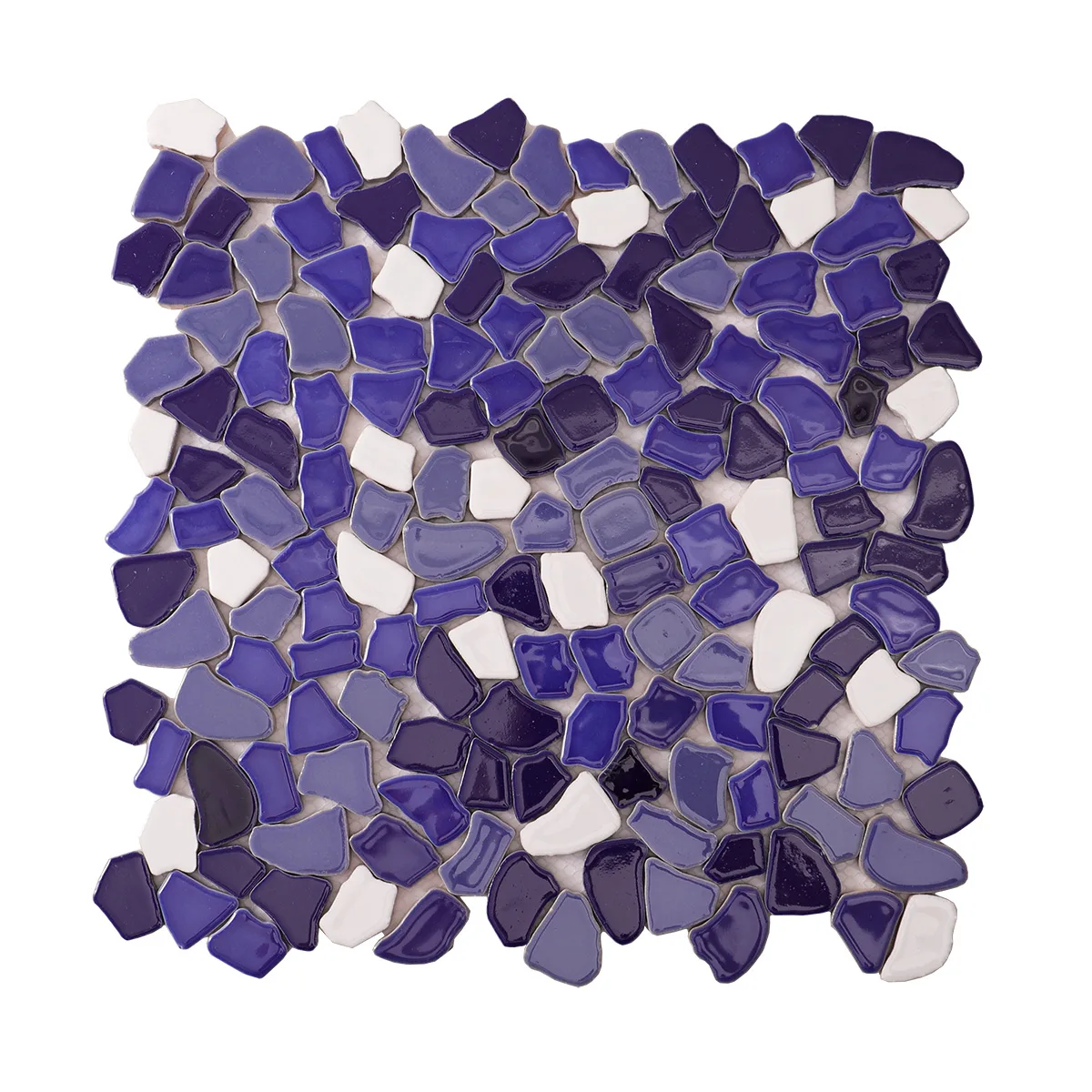
The actual production sheet: irregular hand-cut chips in navy, royal blue, periwinkle and white on a mesh backing.
Look closely at the edges: every chip is a different shape, and the grout lines between them wander. That is the point. A rectified mosaic reads as engineering; this reads as craft. The white chips are also doing quiet work — they lift the mid-tones so the whole field does not collapse into one dark blue mass at a distance.
Dimensions and Specifications
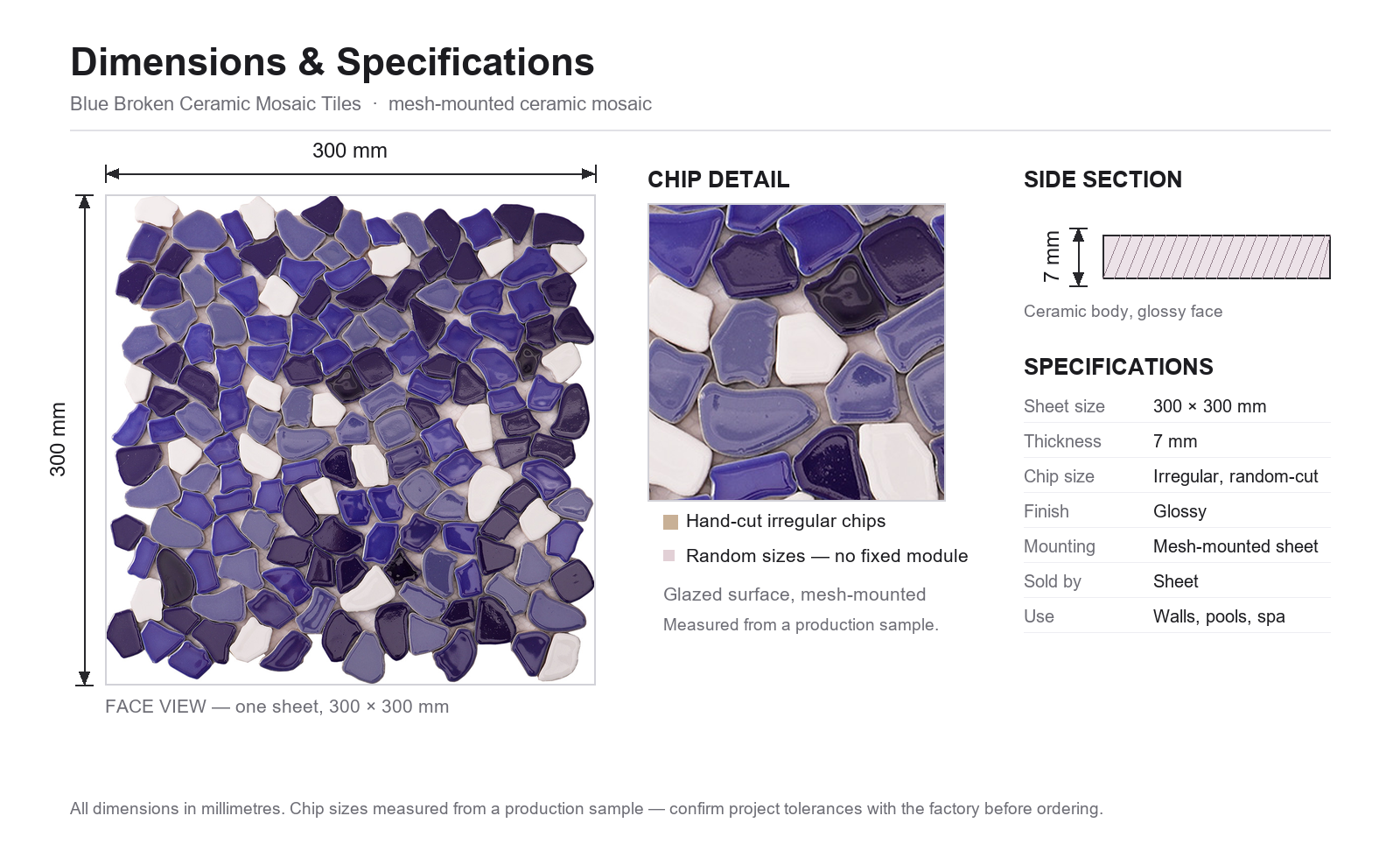
Face view, chip detail and side section — drawn to the production specification.
| Material | Ceramic, glazed |
| Sheet size | 300 × 300 mm |
| Chip size | 7 mm |
| Thickness | Irregular hand-cut, approx. 20–40 mm |
| Finish | Glossy |
| Mounting | Mesh-mounted sheet |
| Sold by | Sheet — quoted per sheet or per m² |
| Applications | Interior walls, backsplashes, spas, pool waterlines, hotel interiors |
At 300 mm per sheet these are practical to install in niches, around window reveals and on curved surfaces. The 7 mm thickness gives a slightly more substantial edge than glass mosaic, which is worth planning for at any transition to large-format tile.
Three Ways to Use It
1. The Bathroom Wall
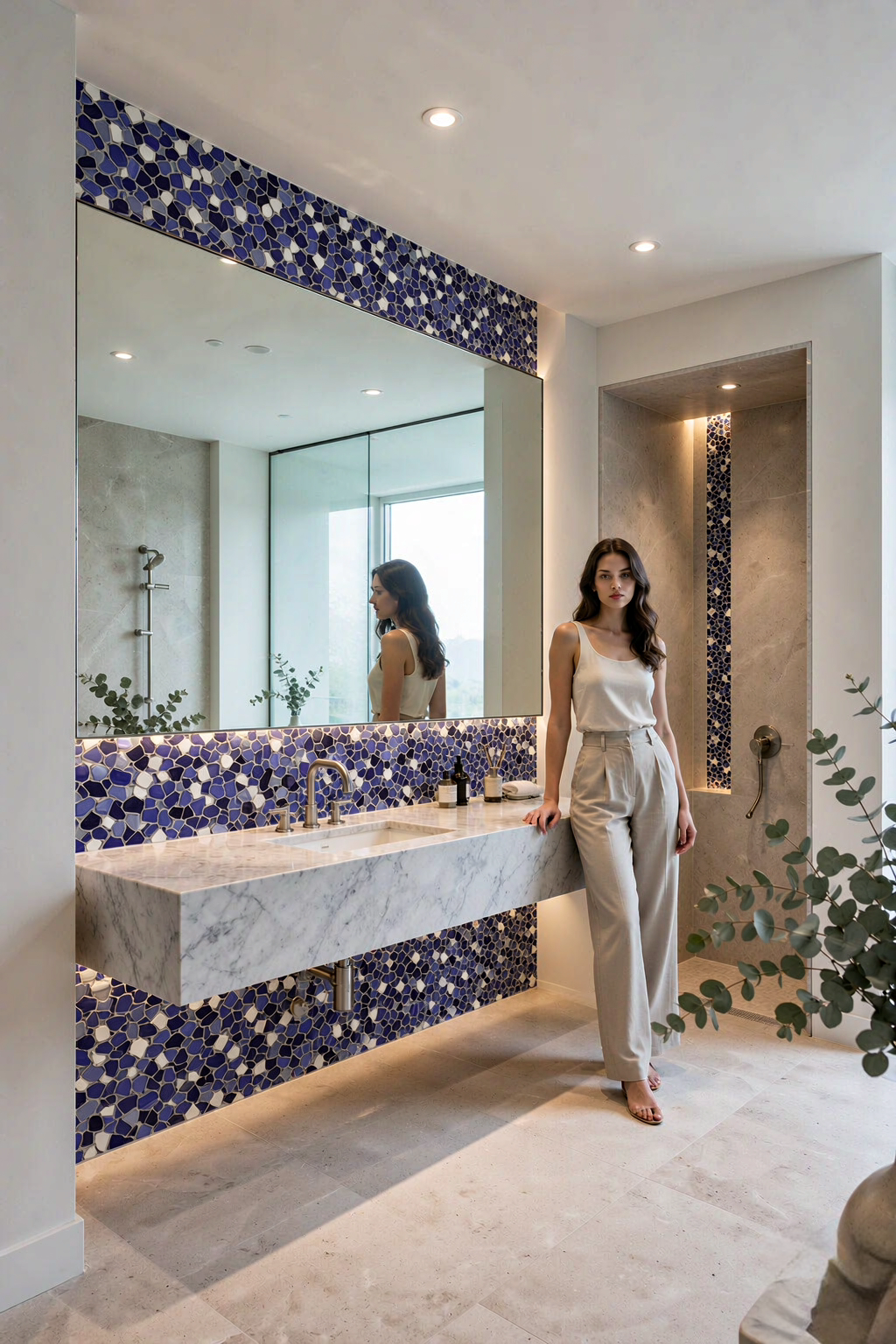
In this bathroom the blue runs as a wide band behind the vanity and continues up over the mirror, with the same material lining the shower niche. Because the chips are small, the wall reads as depth rather than as a flat colour, and the navy-to-periwinkle range stops the room feeling cold. For a fuller treatment of lighting and layout in wet rooms, see our spa-like bathroom design guide.
2. The Hotel Lobby
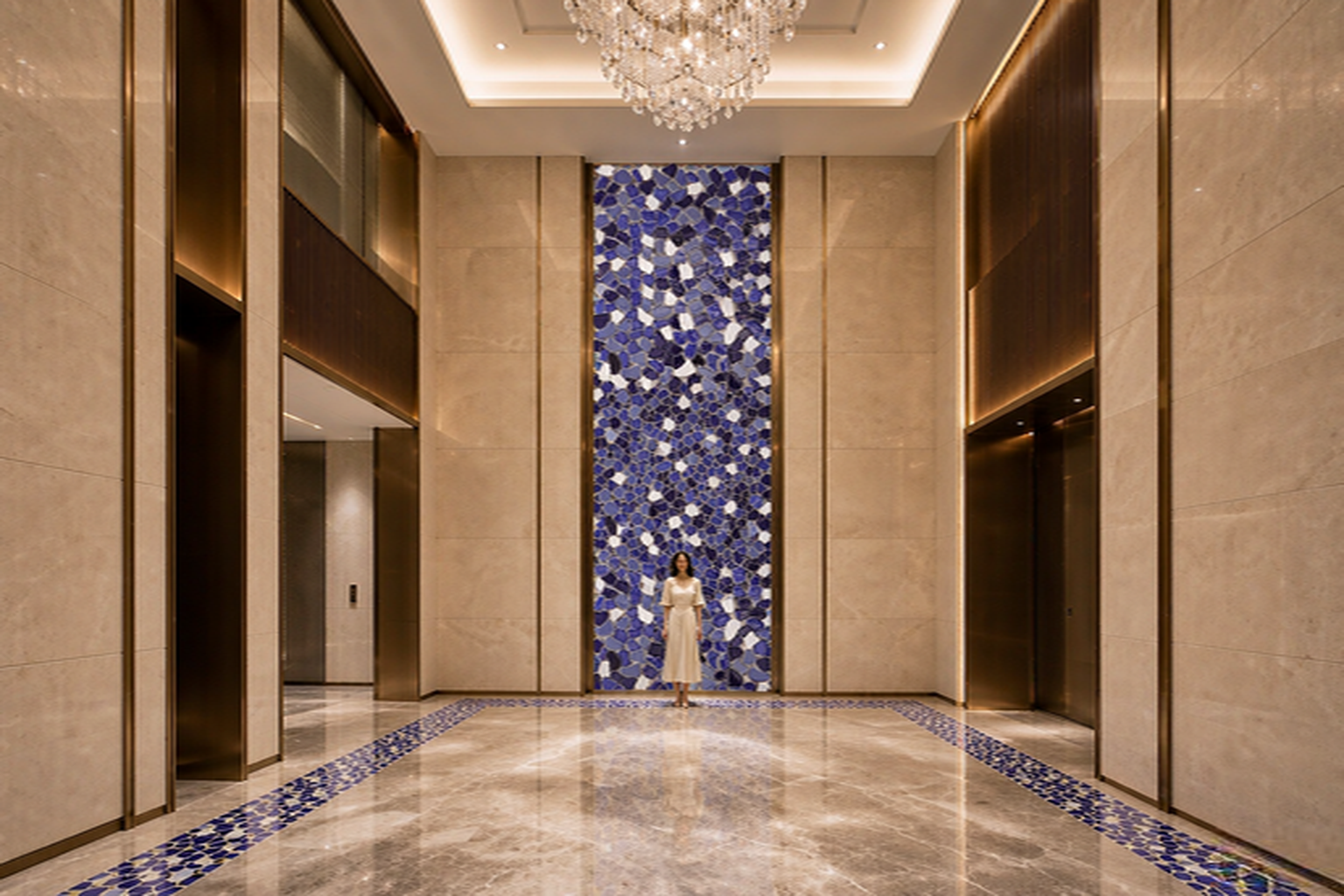
Blue is unusual in hospitality interiors precisely because it is memorable. Used as a single narrow vertical strip in a warm stone lobby, it becomes the one thing a guest remembers about the space without overwhelming it. The floor border repeats the tone at ground level and ties the composition together. Our hotel mosaic design guide and procurement guide cover the specification and delivery side.
3. The Pool Edge
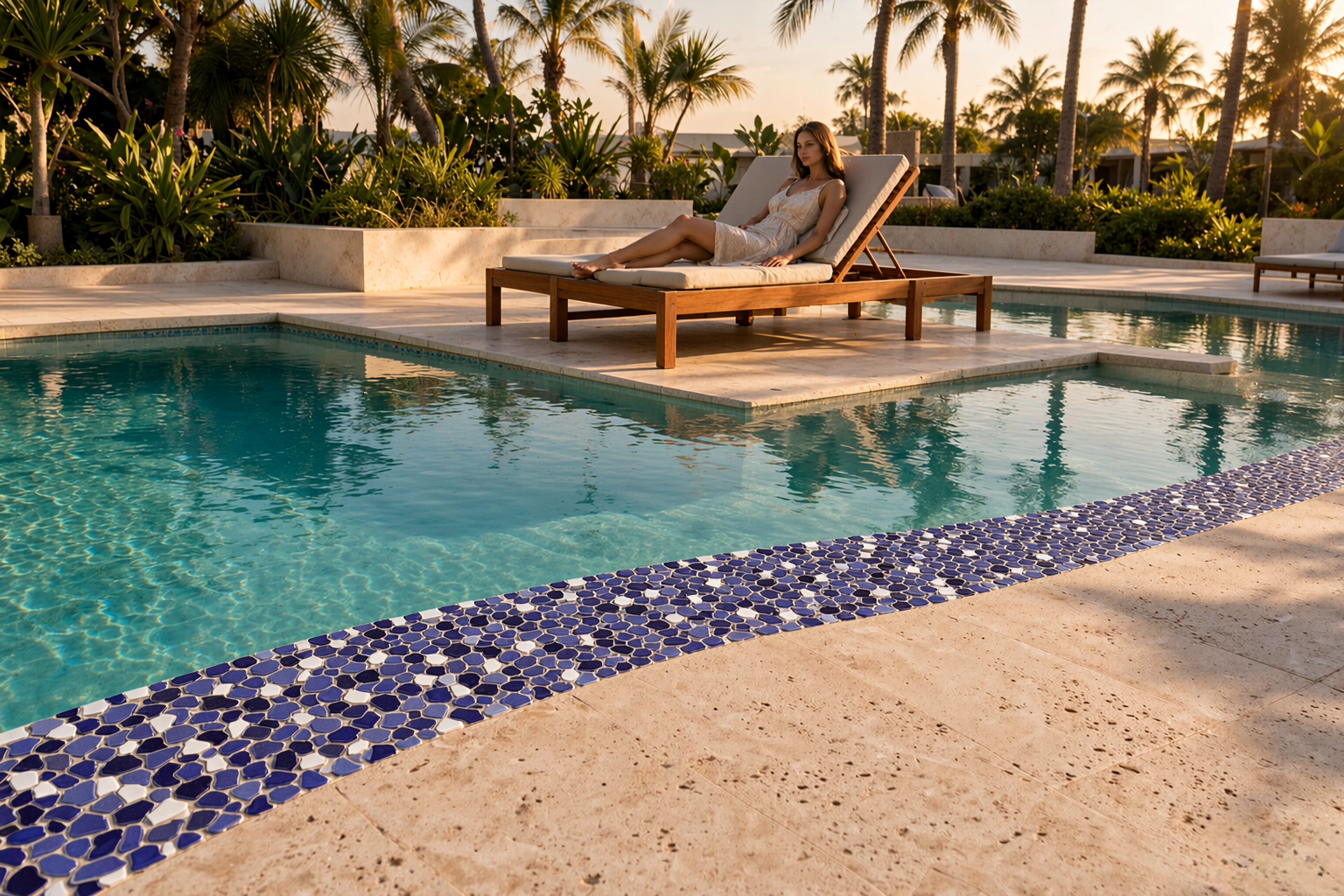
This is where the material makes most sense. Blue mosaic at a waterline is almost a law of pool design, and an irregular blue mix is more forgiving than a uniform one: it reads as depth and movement through the water, and it hides the small deposits that a flat pale tile shows immediately. The glazed surface wipes clean.
Designing With a Random Blue Mix
- Control the value range. The mix already contains light and dark chips. On a small wall, a paler grout keeps it airy; a dark grout turns it into a richer, more submerged blue.
- Use it where water is visible. This material pays for itself beside water, where the tone shifts with reflection and depth.
- Keep the neighbours quiet. Warm stone, pale plaster and brushed metal let the blue speak; a second strong colour will fight it.
- Allow for cutting. Because chips are irregular, cut edges at corners show more than on a rectified tile. Plan borders and trims accordingly.
Factory-Direct, From Foshan
BiliTiles is a manufacturer, not a distributor, working out of Foshan in southern China. For a mixed blue like this the advantage is batch consistency: the navy-to-white ratio is controlled at mixing, so a project ordered in phases can be produced from a reserved blend instead of being topped up from whatever is in stock. We also produce custom blends, gradient panels, and mosaic lettering in the same glaze, which is useful for hotel signage and branded interiors.
Hospitality Specification Notes
For commercial work, send drawings or reference imagery and we will produce a physical sample of the exact mix. We support phased delivery for multi-zone projects, quote per sheet or per square metre, and can advise on adhesives, grout and waterproofing for submerged and high-traffic installations. Sample requests are handled directly on the product page.
Installation and Care
The sheets are mesh-mounted, so joints stay consistent and installation is fast. Use a white thin-set on interior walls and a pool-rated system for submerged areas, and seal the grout in wet zones. Clean with a pH-neutral product and a soft cloth; abrasive pads are the only thing that will dull this surface over time, and they dull the grout first.
One more thing worth knowing: the mix photographs darker than it looks in person. Cameras tend to collapse the navy and royal chips into a single dark tone, which is why so many blue mosaic projects look heavy online and refined in the room. Judge the material from a physical sample in daylight, not from a screen.
Frequently Asked Questions
Will the blue fade in a pool?
The colour is fired into the glaze, not printed on it, so it is stable under water and UV. The tone will look slightly cooler and brighter underwater — order a waterline sample to preview it.
Are the chips all the same size?
No. They are hand-cut to roughly 20–40 mm with random shapes. This is deliberate and is what gives the surface its character.
Can I get a custom blue blend?
Yes. As the manufacturer we can adjust the navy-to-white ratio, produce gradients, or match a Pantone reference.
Where do I see price and samples?
On the Blue Broken Ceramic Mosaic Tiles product page.
Colour, Light and the Water Effect
Blue behaves differently from every other mosaic colour because the eye reads it as shadow. In a north-facing bathroom that is an advantage: the wall picks up whatever daylight arrives and holds it, so the room feels deeper rather than darker. In a room with warm artificial light, the same wall shifts toward violet at the edges, which is why the periwinkle and white chips in this mix matter — they keep the palette from turning muddy under tungsten or 2700K LED. If you are specifying lighting at the same time as tile, ask for a 3000–3500K source with a high colour rendering index; a low-CRI fixture will make the navy chips look flat and grey.
Underwater the effect is stronger still. Water absorbs red first, so the warm component of any tile disappears within the first metre of depth and everything reads cooler and more saturated. A mix that looks slightly muted on a dry sample board will look vivid in a pool. This is why we recommend a waterline sample rather than a dry one for any pool project: the same sheet, viewed wet, is a different material.
Sheet Layout and Pattern Direction
Because the chips are irregular and the mix is random, there is no obvious “up” to a sheet — which is useful. It means installers can rotate sheets to break up any accidental alignment, and it means an offcut from one corner can be used in another without matching a pattern. Two practical rules follow. Keep the grout joint consistent, because the eye will find any joint that widens; and stagger the sheet edges so that the mesh joints do not line up into visible vertical or horizontal lines. On a large wall, ask the installer to dry-lay two or three square metres first and look at it from the doorway — that is where tonal clustering shows up, and it is far easier to redistribute sheets on the floor than on the wall.
Caring for a Blue Mosaic in Wet Areas
Glazed ceramic is close to maintenance-free, but grout is not. In a shower or around a pool, use a penetrating sealer on the grout at installation and refresh it annually. Avoid acidic cleaners on any cement-based grout, and avoid chlorine tablets resting against the waterline. If a white deposit appears at the waterline of a pool, that is usually calcium from the water rather than a fault in the tile, and it lifts with a diluted acid wash followed by thorough rinsing — do that with the pool drained to the waterline, not while it is full.
Make the Water the Focal Point
A blue mosaic is not a neutral choice — which is exactly why it works. Browse the full ceramic and porcelain mosaic range, or go directly to the product page for sizes, factory pricing and samples.