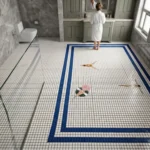
When a boutique hotel in Singapore needed a signature feature wall that would catch light differently throughout the day, the design team specified 20×20mm iridescent glass mosaic tiles in a custom wave pattern. The result transformed a 14-square-metre entrance into the property’s most-photographed spot — generating over 3,000 Instagram posts in the first three months. That project illustrates why glass mosaic tiles have become the material of choice for commercial spaces that cannot afford to be forgettable.
This guide covers everything procurement managers, architects, and interior designers need to know about specifying glass mosaic tiles for commercial projects: material grades, mounting systems, cost drivers, installation workflows, and real-world case outcomes.
Why Glass Mosaic Tiles Dominate High-End Commercial Spaces
Glass mosaic tiles are not simply an aesthetic choice — they solve real design problems that stone, ceramic, and porcelain cannot.
Light Responsiveness
Unlike opaque materials, glass refracts and transmits light. In swimming pools, this creates a luminous, animated surface rather than a flat coloured floor. In retail environments, backlit glass mosaic panels serve as focal points that draw foot traffic. In hospitality lobbies, glass mosaic wall panels shift in appearance from morning to evening, providing an ever-changing visual environment without any mechanical elements.
Chemical Resistance
Annealed and tempered glass mosaic tiles are highly resistant to the chlorine and bromine compounds used in pool water treatment. The non-porous surface prevents calcium and mineral deposits from penetrating, making glass mosaic easier to maintain than natural stone in wet environments. Saltwater pools, spa steam rooms, and gym shower facilities all benefit from this property.
Design Flexibility
Glass mosaic tiles are produced in virtually unlimited colour combinations, surface finishes (polished, frosted, iridescent, metallic), and sheet formats (standard 300×300mm, large-format 600×600mm mesh-mounted, or custom loose-chip formats for artistic installations). This flexibility allows architects to specify truly bespoke installations rather than choosing from a limited product catalogue.
Material Grades: How to Read Glass Mosaic Specifications
Not all glass mosaic tiles are equal. The production method determines durability, translucency, and suitability for different environments.
Cast Glass Mosaic (Stuck-On Sheets)
Cast glass is produced by pouring molten glass into moulds and firing at approximately 800°C. The result is a thick, slightly irregular tile with genuine depth and luminosity. Cast glass is the premium choice for feature walls and pool installations. Typical chip size: 20×20mm, 25×25mm, or 50×50mm on mesh-backed sheets. Thickness ranges from 4mm to 8mm depending on the product line.
Fused Glass Mosaic
Fused glass tiles are produced by laminating two or more layers of glass at high temperature (approximately 1,000°C). The laminated construction provides additional strength and allows interesting visual effects such as colour gradients within a single tile. Fused glass is well suited to high-traffic flooring applications where the extra impact resistance is valuable.
Smalti Mosaic
Smalti is traditional fired glass with a characteristic opaque, slightly irregular surface used in Byzantine and Roman mosaic art. Modern smalti-style tiles are available from specialist manufacturers and are specified primarily for artistic installations where the artisanal quality of the surface is part of the design intent. Cost is significantly higher than standard cast or fused glass.
Recycled Glass Mosaic
Tiles manufactured from crushed post-consumer or post-industrial glass are increasingly specified for LEED-certified projects. Performance is comparable to standard cast glass when properly manufactured, and the environmental credentials can contribute to green building certification schemes. Bilitiles offers several recycled-glass mosaic product lines with third-party environmental product declarations.
Key Technical Specifications for Commercial Procurement
Before issuing a specification or purchase order, procurement teams should confirm the following parameters with the manufacturer or supplier:
- Water absorption: ASTM C373 — should be less than 0.2% for pool and wet-area applications
- Chemical resistance: ASTM D543 — verify compatibility with the cleaning agents used in the facility
- Breaking strength: ASTM C648 — important for flooring applications in commercial corridors
- Mohs hardness: 5–6 for standard glass; tempered glass can reach 7
- Sheet size and chip layout: Confirm the mosaic sheet dimensions match the installation area dimensions to minimise cutting waste
- Mesh backing vs. paper-faced: Mesh-backed sheets are faster to install; paper-faced sheets allow face-mounted installation for certain artistic patterns
Installation Workflow for Commercial Glass Mosaic Projects
Step 1: Substrate Assessment and Preparation
Commercial mosaic installations require a rigid, perfectly flat substrate. Concrete floors must be cured for a minimum of 28 days before tile installation. Any deviation greater than 3mm over 2 metres must be corrected with a self-levelling compound. Waterproofing is mandatory for all wet-area installations and should be specified as a membrane system compatible with the tile adhesive.
Step 2: Layout Planning
Before adhesive is applied, dry-lay the mosaic sheets in the installation area and establish the reference lines. For large commercial installations, use a string-line grid system to maintain alignment over the full installation area. Pay particular attention to transitions between different mosaic sheet formats or colours — plan these joints as feature lines rather than trying to hide them.
Step 3: Adhesive Selection
For standard wall installations, use a white polymer-modified cementitious adhesive (C2S1 classification per EN 12004). For pool and wet-area applications, use a waterproof adhesive with low water absorption. For glass mosaic on glass-back-to-glass installations (backlit panels), use a transparent epoxy adhesive to prevent the adhesive colour from showing through translucent tiles.
Step 4: Setting and Grouting
Apply adhesive with a notched trowel (3×3mm notches for walls, 4×4mm for floors). Press mosaic sheets firmly into the adhesive, using a rubber grout float or fibreglass board to apply even pressure across the entire sheet. Remove the paper facing (for paper-faced products) after the adhesive has initial set, typically 30–60 minutes after application.
Grout selection is critical for glass mosaic. Use a high-performance, polymer-modified grout with a fine particle size (CG2 per EN 13888) to avoid scratching the glass surface during application. For pools and wet areas, use a waterproof grout additive or a pre-mixed waterproof grout product. Epoxy grout is an alternative for maximum durability but requires skilled applicators and significantly longer cure times.
Step 5: Sealing and Protection
Most glass mosaic tiles do not require sealing. However, some decorative glass tile products with metallic or iridescent surface treatments may benefit from a penetrating sealer applied after grout cure. Always test the sealer on a spare tile or inconspicuous area before full application.
Cost Breakdown: What Commercial Projects Actually Pay
Glass mosaic tile costs vary dramatically based on product type, origin, and specification complexity. The following ranges are based on 2025–2026 commercial procurement data for container orders (100–500 m²):
- Standard cast glass mosaic (China, 300×300mm mesh-backed sheets): USD 18–35 per m²
- Premium cast glass mosaic (Europe, custom colours): USD 60–120 per m²
- Iridescent or metallic finish premium: USD 40–80 per m² (China) / USD 100–200 per m² (Europe)
- Fused glass mosaic: USD 45–90 per m²
- Smalti or artisan glass: USD 150–400 per m²
- Installation labour (commercial walls): USD 35–70 per m²
- Installation labour (commercial pools): USD 80–150 per m² (higher due to waterproofing complexity)
A typical 50 m² commercial pool mosaic installation using mid-range cast glass tiles and professional installation would cost in the range of USD 8,000–14,000 for materials and labour combined.
Case Studies: Glass Mosaic in Commercial Practice
Case 1: Boutique Hotel Pool — Shanghai
A 180-room boutique hotel in Shanghai specified iridescent blue-green glass mosaic tiles for a 65 m² rooftop pool. The design intent was to evoke the appearance of a jade disc at water level. The installation required 12,400 individual tiles in a custom gradient pattern — from pale celadon at the shallow end to deep teal at the 2.5m deep end. The project was completed in 18 working days, with the installation crew working in two teams to maintain grout cure times between sections. Post-installation, the hotel reported the pool as its highest-rated guest amenity in online reviews.
Case 2: Luxury Retail Feature Wall — Beijing
A luxury fashion retailer commissioned a 22 m² backlit glass mosaic feature wall for a flagship store in Beijing. The installation used 15×15mm mirror-glass mosaic tiles in a custom geometric pattern designed by the store’s in-house creative team. A dedicated LED lighting system was specified behind the mosaic to provide adjustable colour temperature from warm white (3,000K) to cool white (5,000K). The mirror finish of the tiles amplifies the lighting effect, creating a luminous surface that changes with ambient light conditions in the mall.
Case 3: Corporate Spa — Shenzhen
A 3,200 m² corporate wellness centre in Shenzhen used two types of glass mosaic tile in a single large installation: a frost-finished neutral grey for the main spa walls and an iridescent pearl finish for the central meditation pool surround. The installation required precise colour-matched grout (custom colour-matched to the tile palette) and a specialist grout applicator to achieve the seamless appearance the design team specified. The project won a regional interior design award in 2024.
Common Procurement and Installation Mistakes to Avoid
Commercial glass mosaic projects fail — or significantly exceed budget — for a predictable set of reasons. Anticipating these issues before they arise saves substantial corrective cost.
Mismatch Between Tile Batching
Glass mosaic tiles from different production batches can exhibit slight colour variations, particularly for custom colours and specialty finishes. Always order the full project quantity plus a 10–15% contingency from the same batch, and request a sample approval process before production runs begin.
Insufficient Adhesive Coverage
Glass mosaic tiles — particularly thin-format tiles — require 100% adhesive contact beneath the tile. Any voids will eventually lead to tile cracking or debonding. Use the back-buttering technique (applying adhesive to both the substrate and the back of the tile) for any installation where the tile is thinner than 5mm.
Grout Staining on Polished Glass
Grout residue on polished glass surfaces is difficult to remove without damaging the tile finish. Apply a grout release agent to polished glass tiles before installation, or use pre-mixed grout products that are easier to clean. Never use acid-based cleaners on glass mosaic tiles without manufacturer approval.
Ignoring Movement Joint Requirements
Large commercial mosaic installations must incorporate movement joints at intervals of 4–5 metres and at all changes of plane. Specifying movement joints during the design stage costs almost nothing; adding them after installation requires cutting out sections of completed work.
Maintenance Requirements for Commercial Glass Mosaic
Glass mosaic tile surfaces are relatively low-maintenance compared to natural stone, but they still require a planned maintenance programme in high-use commercial environments.
- Daily: Squeegee and rinse pool mosaics after each use to prevent calcium build-up
- Weekly: Clean wall mosaics with a pH-neutral cleaner and a soft brush or microfibre cloth
- Monthly: Inspect grout lines for cracking or disbondment, particularly in wet areas
- Quarterly: Deep clean with a specialist glass mosaic cleaner; check and re-seal any applicable areas
- Annual: Professional inspection by a tile specialist; address any tile damage promptly to prevent water ingress
Conclusion
Glass mosaic tiles are a premium material that delivers genuine design value — light responsiveness, chemical durability, and unlimited colour and finish options — that no other tile material can match. For commercial projects, the premium cost is justified when the installation is properly planned, correctly specified, and professionally installed.
The difference between a glass mosaic installation that becomes a landmark feature and one that fails prematurely lies in the quality of decisions made before a single tile is ordered. Substrate preparation, adhesive selection, grout specification, and movement joint design are not afterthoughts — they are the foundation of a successful commercial mosaic project.
Bilitiles supplies glass mosaic tile products for commercial projects worldwide, with dedicated procurement support for architects, interior designers, and project managers. Contact our commercial team for technical specifications, sample requests, and project pricing.