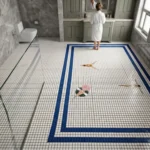
Mosaic Tile Flooring Patterns: A Complete Design & Installation Guide
Mosaic tile flooring has undergone a remarkable resurgence in both residential and commercial design. Once relegated to Mediterranean villas and luxury hotel lobbies, mosaic floor tiles are now a mainstream choice for homeowners, architects, and interior designers seeking to combine durability with visual impact. Unlike large-format tiles that can feel industrial or monotonous, mosaic tiles—typically defined as pieces smaller than 2 inches—allow for intricate patterns, smooth curves, and bespoke designs that transform a floor from a walking surface into a design statement.
This guide covers everything you need to know about mosaic tile flooring patterns: the classic layouts that never go out of style, material considerations specific to floor applications, room-by-room design strategies, installation requirements that differ from wall mosaics, and a forward-looking look at the trends defining mosaic flooring in 2026 and beyond.
Why Choose Mosaic Tiles for Flooring?
Before diving into patterns, it is worth understanding why mosaic flooring is worth considering over larger tile formats or alternative materials like hardwood and polished concrete.
Design flexibility. The small format of mosaic tiles makes them ideal for curved spaces, sloping floors, and intricate inlays that large tiles simply cannot accommodate. A mosaic floor can integrate house numbers into an entryway, a hotel logo into a lobby, or a wave pattern into a pool surround—all in a single, seamless surface.
Slip resistance. Because mosaics have more grout lines per square meter than large tiles, they offer superior slip resistance—a critical factor for pool decks, bathroom floors, and commercial kitchens. Textured stone and unglazed ceramic mosaics amplify this advantage.
Durability under foot traffic. Properly installed mosaic floors—particularly those using porcelain or natural stone—can last decades even in high-traffic commercial environments. The Roman baths of antiquity, paved in stone mosaics, have survived more than 1,500 years.
Visual continuity. Mosaic tiles allow for gradient effects, color blending, and patterns that create visual flow between rooms. A well-designed mosaic floor can make a small space feel larger or a large space feel intimate.
Classic Mosaic Flooring Patterns
1. Herringbone
Herringbone is arguably the most popular mosaic flooring pattern in contemporary design. It consists of rectangular tiles (typically 2″×4″ or 1″×2″ for mosaics) laid at 45-degree angles in a V-shaped, zigzag pattern.
Best for: Entryways, hallways, and commercial lobbies where a sense of direction and movement is desired.
Material recommendation: Porcelain or ceramic mosaic sheets (mesh-backed) for ease of installation.
Design note: A contrasting grout color emphasizes the zigzag; a matching grout creates a more subtle, woven appearance.
2. Basketweave
Basketweave uses pairs of rectangular tiles arranged to mimic the over-under pattern of woven reeds. It is a classic choice for traditional and transitional interiors.
Best for: Bathrooms, powder rooms, and boutique hotel corridors.
Material recommendation: Marble or travertine mosaics for an authentic, timeless look.
Design note: Basketweave works particularly well with warm-toned stones (beige, honey onyx, travertine).
3. Hexagonal (Honeycomb)
Hexagonal mosaics—often called “honeycomb” patterns—are a staple of both vintage and modern design. The 1940s and 1950s saw black-and-white hex mosaics in American bathrooms; today, hex mosaics are available in colors ranging from muted earth tones to bold jewel tones.
Best for: Small bathrooms, laundry rooms, and mudrooms where the geometric pattern adds visual interest without overwhelming the space.
Material recommendation: Ceramic or porcelain hex mosaics (pre-mounted on sheets).
Design note: Use a dark grout with light hex tiles (or vice versa) to make the honeycomb pattern pop.
4. Pinwheel (Hopscotch)
The pinwheel pattern alternates small square tiles (typically 1″×1″) with larger squares (typically 2″×2″) arranged so that four small squares form a “frame” around a large square, creating a rotating, pinwheel-like effect.
Best for: Kitchens, breakfast nooks, and casual dining areas.
Material recommendation: Ceramic or porcelain; the pattern works well with a matte finish.
Design note: Use contrasting colors for the small and large squares to maximize the pinwheel effect.
5. Cobblestone
Cobblestone-pattern mosaics use irregularly shaped tiles designed to mimic natural stone paving. The effect is organic and rustic, making it a popular choice for outdoor pathways, pool surrounds, and Mediterranean-style interiors.
Best for: Pool decks, patios, and outdoor shower areas.
Material recommendation: Unglazed porcelain or natural stone (slate, travertine) with a textured surface for slip resistance.
Design note: Ensure the tiles are rated for freeze-thaw conditions if installing outdoors in cold climates.
6. Opus Romano (Random Modular)
Opus Romano is a classic Roman floor pattern that uses a deliberate mix of tile sizes—typically combining 1″×1″, 2″×2″, and 4″×4″ squares in a seemingly random but carefully balanced layout.
Best for: Wine cellars, outdoor entertaining areas, and heritage restoration projects.
Material recommendation: Natural stone (travertine, limestone, marble).
Design note: This pattern requires skilled installation; the “random” layout must be planned in advance to avoid clustering similar sizes.
7. Gradient / Ombre
A modern innovation made possible by digital printing and precise color sorting, gradient mosaics transition smoothly from one color to another—for example, from deep navy at the edges of a room to crisp white at the center.
Best for: Spa bathrooms, hotel lobby feature floors, and high-end residential entries.
Material recommendation: Glass or ceramic mosaics with factory-sorted color gradation.
Design note: Gradient floors should be installed by professionals experienced with the specific batch; color matching across production runs is critical.
Room-by-Room Mosaic Flooring Design Guide
Entryways & Foyers
The entryway sets the tone for the entire home or commercial space. A mosaic floor here signals craftsmanship and attention to detail. Use a durable, stain-resistant material (porcelain or glazed ceramic) in a pattern that draws the eye inward—herringbone running toward the main living area, or a circular medallion as a focal point. Incorporate a border in a contrasting color to “frame” the space.
Kitchens
Kitchen floors must withstand dropped utensils, spilled liquids, and heavy foot traffic while complementing cabinetry and countertops. Mosaic floors in kitchens work best as a border or island accent rather than a whole-room treatment, unless the kitchen is open-concept and the mosaic ties into an adjacent living area. A pinwheel or basketweave pattern adds warmth without overwhelming the space.
Bathrooms
Bathrooms are the natural home of mosaic flooring. The small format is ideal for the uneven substrates often found in bathroom floors, and the increased grout lines provide essential slip resistance. Use hex mosaics for the main floor and a complementary pattern (such as a single row of basketweave) as a border.
Pool Decks & Surrounds
Pool areas demand the highest levels of slip resistance and chemical durability. Cobblestone or large-format mosaics (2″×2″ and up) with a textured, unglazed surface. Avoid glossy finishes entirely. Incorporate a contrasting “safety border” 24 inches from the pool edge to provide visual and tactile warning.
Commercial Lobbies & Hotels
In hospitality design, the floor is a branding opportunity. High-end hotels increasingly use custom mosaic patterns—incorporating logos, geometric brand elements, or region-specific motifs—to create a memorable first impression. Commission a custom mosaic design that reflects the brand identity. Use durable materials (porcelain or natural stone) and consider incorporating radiant heating beneath the mosaic for guest comfort.
Material Selection for Floor Mosaics
Not all mosaic materials are suitable for flooring. Wall-grade mosaics are often thinner and less durable than floor-rated equivalents.
| Material | Floor Rating | Slip Resistance | Cost (USD/sq ft) | Best Application |
|---|---|---|---|---|
| Porcelain | ★★★★★ | High (textured) | $8–$20 | High-traffic areas, pools |
| Ceramic | ★★★★☆ | Medium | $5–$15 | Kitchens, bathrooms |
| Natural Stone | ★★★★☆ | Medium-High | $15–$40 | Lobbies, entryways |
| Glass | ★★☆☆☆ | Low (unless textured) | $20–$50 | Accent bands, spas |
| Metal | ★★☆☆☆ | Low | $25–$60 | Accent only, not main floor |
| Recycled Glass | ★★★☆☆ | Medium | $15–$35 | Eco-conscious projects |
Key takeaway: For main floor surfaces, porcelain and ceramic mosaics offer the best balance of durability, slip resistance, and cost. Natural stone is appropriate for low-traffic luxury applications. Glass and metal should be used as accents only.
Installation Considerations Specific to Mosaic Flooring
Subfloor Preparation
A floor mosaic is only as good as the subfloor beneath it. The subfloor must be perfectly level (deviation ≤ 1/8″ over 10 feet) to prevent lippage, structurally sound, and properly waterproofed in wet areas using a membrane system such as Schluter-DITRA.
Adhesive Selection
Use a polymer-modified thin-set adhesive rated for floor use. For large-format mosaics (2″×2″ and larger), a 1/4″×3/8″ trowel is typical. For smaller mosaics (1″×1″ and smaller), a 1/8″×1/8″ trowel prevents adhesive squeeze-up between tiles.
Grout Selection
Sanded grout is required for grout joints 1/8″ and wider. For floor mosaics, consider epoxy grout for superior stain resistance, durability, and color consistency—but note that it is significantly more difficult to install and requires experienced hands.
Slip Resistance Testing
In commercial applications and pool areas, request the DCOF (Dynamic Coefficient of Friction) rating from the tile manufacturer. A DCOF of 0.42 or higher is the ANSI standard for level interior floors. For pool decks, local building codes may require DCOF ≥ 0.60.
Cost Guide: Mosaic Flooring in 2026
| Level | Material | Installed Cost (USD/sq ft) | Typical Application |
|---|---|---|---|
| Budget | Ceramic mosaic sheets | $10–$18 | Bathrooms, laundry rooms |
| Mid-range | Porcelain or marble mosaics | $18–$35 | Kitchens, entryways |
| Premium | Custom stone or glass mosaics | $35–$75 | Hotel lobbies, luxury homes |
| Ultra-premium | Fully custom designed mosaics | $75–$200+ | Signature commercial spaces |
Hidden costs to anticipate: Subfloor preparation ($2–$5/sq ft), custom design fee ($500–$3,000), and stone sealing ($1–$3/sq ft plus resealing every 2–3 years).
Maintenance & Durability
Routine care: Sweep or vacuum weekly. Mop with pH-neutral cleaner. Avoid acidic cleaners (vinegar, lemon) on natural stone. Reseal natural stone every 2–3 years; seal grout annually in high-traffic areas.
Stain removal by material: Porcelain/Ceramic: warm water and mild detergent. Natural Stone: oil-based stains may require a poultice (baking soda + water) left overnight. Glass: hard water spots removed with 50/50 white vinegar/water solution.
Expected lifespan: Porcelain mosaics: 30–50 years. Ceramic mosaics: 20–40 years. Natural stone mosaics: 50+ years (with proper maintenance).
2026 Mosaic Flooring Trends
1. Large-Format Mosaics
Tiles as large as 4″×4″ are now marketed as mosaics when mounted on mesh sheets. Large-format mosaics reduce grout lines (easier maintenance) while retaining pattern versatility.
2. Warm Metallics in Floor Accents
Brass, copper, and champagne gold metal mosaics are increasingly used as narrow accent bands within stone or porcelain floors—particularly in luxury hotel lobbies and high-end residential foyers.
3. Sustainable & Recycled Materials
Eco-conscious specifiers are driving demand for mosaics made from recycled glass, reclaimed stone, and porcelain produced with reduced carbon footprint. Several manufacturers now offer full transparency on embodied carbon.
4. Biophilic Patterns
Patterns inspired by nature—leaf veins, river stones, ocean waves—are surging in popularity, particularly in wellness spaces. These patterns are typically achieved with custom-cut stone or waterjet-cut porcelain.
5. Continuous Indoor-Outdoor Flooring
With the rise of indoor-outdoor living, designers are specifying the same mosaic pattern for interior floors and exterior patios, using frost-resistant porcelain rated for both environments. The visual continuity blurs the boundary between inside and outside.
Conclusion
Mosaic tile flooring offers a rare combination of durability, design flexibility, and timeless appeal. Whether you are specifying herringbone porcelain for a hotel lobby, hex ceramic for a bathroom renovation, or a fully custom stone medallion for a luxury residence, the key to success lies in thoughtful material selection, meticulous subfloor preparation, and skilled installation.
As you plan your next flooring project, consider not just the visual impact of the pattern but also the practical demands of the space: foot traffic, slip resistance, maintenance expectations, and long-term durability. A well-chosen mosaic floor does not just complete a room—it becomes the foundation for every design decision that follows.
Looking for custom mosaic flooring design services for your hotel, resort, or commercial project? Contact our design team to discuss bespoke patterns, material samples, and turnkey installation support.